Sunday, June 25, 2017

WikiTree for Genetic Genealogy, Part 2

Over on WikiTree, I shared a link to Part 1 of this series and asked for feedback. One bit of feedback I received (Thanks, Kay!) was a reminder that there are some links in the DNA Connections section that I didn't cover.

In my previous post, I showed you how, once someone has included test information on their profile, that test information is also listed on the profiles of everyone with whom they might share a genetic connection. Depending on whether the profile is for the person who was tested, or was for someone connected to them, that section will be titled DNA Tested or DNA Connections, but the information found in that section is the same.

Figure 1: DNA Tested section on My Profile on WikiTree
I'd like to give you a closer look at the information and links in the DNA Tested or DNA Connections section, but before I do that, I need to point out that, so far, all my examples have focused on autosomal testing results. The reason for that is that I have only taken an autosomal test.

How Dna Results Are Listed on Profiles

Let's take a quick glance at what you'll see about DNA on profiles with different types of DNA testing.

If someone has had no DNA testing (or at least, no testing supported by WikiTree) and no one with whom they are likely to share DNA has had such a test, their profile will say so:

Figure 2: DNA — No Tests
Someone who has had yDNA, mtDNA, and autosomal tests, or who shares DNA with relatives who have had these tests will have all of these listed:

Figure 3: DNA — All DNA Test Types

WikiTree uses a set of symbols to help distinguish the type of test noted on a profile.
  • For yDNA, also written as Y-DNA, the symbol is: 
  • For mitochondrial DNA, also written as mtDNA, the symbol is:
  • For autosomal DNA, also written as atDNA or auDNA, the symbol is:

Understanding Links in the DNA Section

The links in the DNA Tested or DNA Connections section on a profile may be to a profile or function within WikiTree, or may take you outside of WikiTree.

Figure 4: Links in DNA Connections
  1. To open the profile of the test taker, just click their underlined name.
    Note: Some test taker's prefer to keep their profiles anonymous. See the section on anonymous profiles.
  2. To see the relationship between the person whose profile you are on and the test taker named in the DNA Connections list, click the double arrows: 
  3. To go to the Family Tree DNA website (FTDNA), click the Family Tree DNA link.
  4. To see the tests and a link of all people who might share the test taker's DNA, click the test details link. (See Figure 5, which shows my dad's results.)

    Note: The test details link is only available to those logged in to WikiTree.

Figure 5: Family Tree DNA Family Finder Test Details & Connections
The Test Details & Connections page will be covered in greater detail in a later post.

Anonymous Profiles

WikiTree offers it's members various levels of privacy for themselves and the profiles they manage. Some members choose to keep specific profiles, especially those for living people, private, while others will choose to have a public biography, a public family tree, or both. (For a more complete description of WikiTree's privacy rules, see Help: Privacy and Help: Living People.)

You will, as you are exploring your DNA connections on WikiTree, almost certainly encounter folks who have profiles on WikiTree and have entered their DNA tests, but who keep their profiles or family trees private. If that's the case, you may see a message telling you that the results are privacy protected:

Figure 6: Test Details & Connections Privacy Protected
When this happens, you can contact the profile manager to introduce yourself and open a discussion about your connection. Often, a profile manager will agree to make their family tree public, even if they prefer to keep their profile private.

You can find the profile manager in the yellow and green box beneath the vitals section.


I hope this helps you get started in understanding how to use WikiTree to enhance your genetic genealogy. Any thoughts on what you'd like to see for Part 3 will be welcome.

ETA: Added Figure 6, along with intro text. Sorry it wasn't available in the first draft, but I was having a hard time finding anyone with  privacy protected DNA test details and connections. That's a good thing!

Saturday, June 24, 2017

WikiTree for Genetic Genealogy, Part 1

I've been a WikiTree member since May 2013. During that time, the collaborative genealogy website has grown immensely. I'm not sure how many people were involved when I first joined, but today there are 433,449 genealogists managing 14,443,459 profiles for ancestors around the world.

Almost everyone involved with WikiTree is a volunteer. The site is free and promises to stay that way. Although the display and entry features could be considered a bit bare bones, it offers tremendous flexibility and the site is in the process of becoming a true genealogy powerhouse.

The WikiTree Honor Code asks that genealogists using the site follow a set of principles that honor: collaboration, accuracy (list your sources!), privacy, and respect for others. We constantly remind each other of the need for sources and accuracy. This emphasis on accuracy, supported by sources, will, we hope, make WikiTree the most accurate single-family tree available.

One way in which WikiTree is doing this is by offering a very different set of tools for folks who are using DNA to enhance their genealogy efforts. If you've gotten DNA tested, then you know that once your test results are complete, you get a list of matches and some numbers showing the approximate distance of your connection, but it can be really hard to figure out the exact links in that connection.

This is where WikiTree can be really useful. Adding your test IDs to your profile on WikiTree, and creating profiles for your ancestors and other relatives, can help you to discover distant cousins and to determine your MRCA (Most Recent Common Ancestor).

Before I go any further, I think I should mention that WikiTree does not do any genetic testing, nor do they post or share your test results. They come at this from the opposite direction. Who are your ancestors and which are likely to have contributed to your DNA?

The WikiTree method is an unusual and complementary approach to genetic genealogy, unlike the approach found on genetic genealogy testing sites. When someone enters their test IDs, WikiTree connects those tests to the profiles of other relatives who are in their direct line. This can be a big help in identifying the path between you and your family members. Here are the tests shown on my WikiTree profile, now.

Figure 1: DNA Connections for Pamela Lloyd
I've been able to confirm my connection to all of the people listed here. I did this through a combination of genetic genealogy, comparing my tests to theirs, and by traditional genealogy, discovering the paper trail (albeit through the use of online records, by and large). I also added the genetic test results to each of the profiles on WikiTree, recording my findings in support of our connections.

For example, my connection to my second cousin, Judy Stafford is noted in the source lists of our profiles and the profiles of our family member as shown below:

Figure 2: Connections Linking Judy and Me
What does all of this do for me?

Well, besides helping me to confirm my relationships, it also means that people who share any of my ancestors as relatives will be able to learn about their connection to me, and I to them. Connecting to cousins is a big goal for me, and I hope it is for you, too!

Right now, I know of 125 descendents of Alpheus and Ella, but they had seven children, six of whom lived to adulthood, and I haven't traced all those lines down to find all of my possible living relatives.

Now, consider that Alpheus and Ella are just two of my eight great grandparents, and that this process works for more distant relatives, as well.

Also, so far, I've only been working with autosomal DNA. One of my known relatives has had his Y-DNA tested, and I plan on upgrading my dad's DNA test to a Y-DNA test in the near future. I know that one of my paternal first cousins recently tested, so his results will contribute to the findings, as well. Since Y-DNA is useful much farther back than autosomal DNA, this means the potential pool of relatives will grow very quickly, and the likelihood of finding them on WikiTree will go up, too.

Let's look at Figure 1, again. Tests I entered on my profile connect to Judy, me, my father, and a first cousin once removed. In this case, we all knew about each other before we put the information up on WikiTree (although it was through our online genealogy that I connected with Judy and John, or perhaps I should say that Judy connected herself and John with me), but if someone I don't know about who is in my direct line tests and shares that information, their name and information about where they tested will show up, making it easier for me to connect with them.

Also, those tests populate to all of my direct line ancestors. Here's what's shown on my paternal grandfather's page.

Figure 3: DNA Connections for Elmer Bruce Lloyd
Notice that the list of connections here is different. My dad and I are still shown, but Judy and John aren't listed, because my connection to them is through my mother. More importantly, there's someone new, PJ. PJ and I are fourth cousins. PJ and I also "met" through our respective research, although I'm not sure now whether it was through WikiTree or Ancestry, because we are both active at both sites.

WikiTree makes it easy to see our exact relationship and to discover our MCRA. All I need to do is click the link to her profile and select Relationship to Me from the drop-down menus:

Figure 4: WikiTree Relationship Found Page for PJ and Pamela
I've covered a lot about how WikiTree can help expand your understanding of your genetic genealogy in this post. There's lots more, and I'm still learning about this, so I plan on discussing more of WikiTree's tools for DNA in future posts. I hope you've enjoyed this post and will join me for those future posts, as well.

Thursday, July 28, 2016

Surnames Come in Many Different Spellings and Pronunciations

I'm currently taking a genealogy course through FutureLearn: Genealogy: Researching Your Family Tree, which is administered by the University of Strathclyde in Scotland. I'm really loving this class. I've tried online classes before and generally been dissatisfied with them, but this class is formatted extremely well and the instructor is excellent. I especially like that, while there are a few short video segments, the class doesn't depend upon extensive or long video lectures, and there's always the option of reading a transcript instead of listening to the videos.

One of this week's exercises was to record a snippet about an issue with surnames in your family, and since this was in the context of the possible differences in surname pronunciation, that was what I chose as my topic.

I've recorded my interpretation of the pronunciation of two different surnames in my family on Vocaroo: McKeown and McEwen. I've always thought they would represent similar sounding names, but on overhearing my first attempt at recording my thoughts, my husband offered a different pronunciation for the first spelling. You can listen to my recording below or go directly to http://vocaroo.com/i/s0unK6jqueKy - fair warning, the recording seems loud to me, so be ready to adjust your volume if need be.

 
Record music and voice >>

I'm told that the sound bites recorded at Vocaroo are removed after a few months. If you can't hear it, and you really want to, leave a comment and I'll get back to you with the recording. Or, maybe I'll try to find a more permanent way to share it.

Saturday, November 28, 2015

Want to Take Advantage of DNA Sales this Weekend? Trying to Figure Out Which DNA Test to Buy?

One of my cousins (not a first cousin) and I recently got our DNA tested. She got hers done through Ancestry, and I got mine through FamilyTreeDNA (FTDNA). Then, she transferred her results to FTDNA, so we could use their tools to compare and collaborate on finding more cousins.We've been thrilled by the results.

First off, I was really excited to see that our results confirmed our relationship. She gave me a funny look (metaphorically speaking, since this was via email) and asked, "Did you have any doubts?" Well, as a genealogist, I've learned not to take relationships for granted. By which I mean, while I was pretty sure that our parents and other ancestors were who we believed they were, I've read too many accounts of genetic results that turned up evidence to the contrary of the paperwork. So, now I have incontrovertible evidence that, for at least this section of my family tree, I've got the right people in the right relationships, no hanky panky involved.

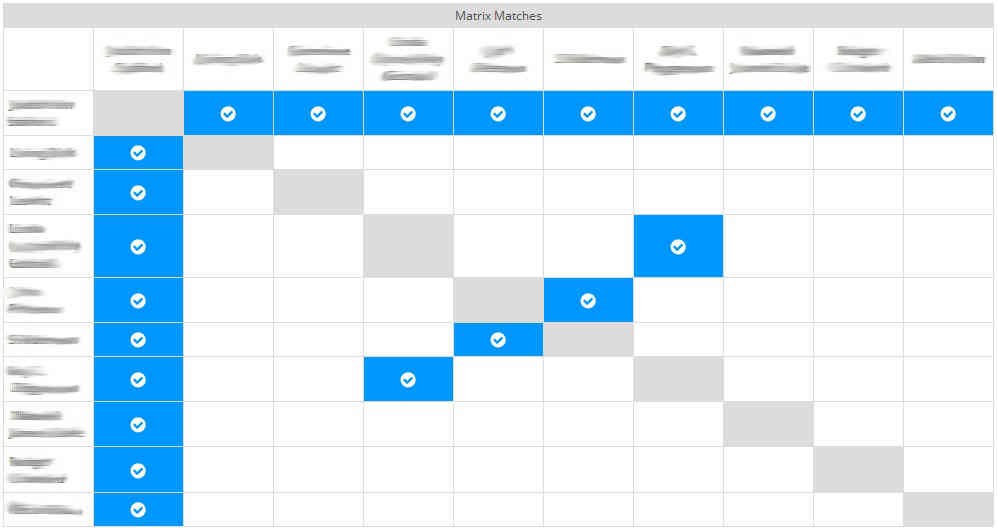
Secondly, we've started finding our mutual cousins. So far, FTDNA has provided us with a list of 24. That's right. We have twenty-four mutual cousins that neither of us had even an inkling of before we started! Plus, some of those cousins have additional relationships to each other. Which is probably pretty normal, when you think about it, but it's still very cool to see all of this on the screen. So, screenshot time!


What I really love about this is seeing those two pairs of matches in the middle. Excellent!

But, all that's not really the point of this post.

Yesterday, as we were discussing which of the many new relatives turned up by our DNA results who are related to both of us, she said the following: "I'm going to ask Uncle John if he will do a DNA test.  Do you have a feel for which test would be best?"

My immediate response, which never made it into my actual response, was, "Not a clue. Except it should include yDNA."

But, after that, I started thinking. And researching. Because I really can't help myself when someone asks a questions like that. And, once I'd sent it, I realized there was some useful and timely information that might help other people thinking about DNA testing.

Here's the response she actually received (with a few minor details changed to protect personal information about living family members, as well as a bit of touching up to fill in details I skipped):
I've been drooling over the sales going on at FTDNA (there is also a bonus for current members, mine was only an extra $5 off; I don't know if they are offering bonuses to transfers), wishing my dad would agree to a test. Who knows, maybe he will. The last time we spoke about it, he wasn't interested, but maybe all the connections you and I have been discussing will be enough to convince him that it will provide valuable information.
As to which test you might choose, there are a range of possible tests that might be appropriate. It all depends on your goals and your budget.
Ancestry's test price is very low, but I think they are only offering autosomal tests these days. They have what may be the best offer on sale right now, at just $69. 
23andMe includes health related information; at least one of their health tests has even received approval from the FDA. So, that's something no one else that offers genealogy genetic testing is offering. But, the base cost is higher, they don't seem to be offering a sale, and I don't know how effectively they connect cousins.
FTDNA has a wide range of tests, not just the autosomal, but also yDNA and mtDNA, and even those they offer in varying degrees, depending on how in-depth you want the test and how deep your pockets are.

If you can, I think one of the yDNA tests paired with an autosomal test might be the way to go for Uncle John. <-- ACTUAL ADVICE*
FTDNA offers three levels of yDNA tests: y37, which checks 37 markers on the Y chromosome; y67, which checks 67; and y111, which checks 111. The y37 allows one to confirm "close relationships." If I'm reading them right, iGenea (yet another company selling DNA tests, but one I know nothing about) suggests a 37-marker test provides information that goes back 3 to 7 generations. FTDNA makes a claim of up to 340,000 years, which I think applies to the y111 test.
On the other hand, I just found a Discover magazine article (from May 2014) that references a new test from Prosapia Genetics that only costs $135, but goes back 1000 years to pinpoint a (only one?!) location for one's "ancestral home." ($100 gets you the basic test; $35 gets you the location detail.) Since the number of ancestors at the 1000 year mark would be huge, this feels a bit gimmicky to me, but also fun.

If my dad agreed to a test, I would definitely ask that he get a yDNA test, so I could confirm our patrilineal line; there are a few questions I have about which John Lloyd back in the 1700s is the right John Lloyd. But, what I'd be wishing for, and what I know I've only got a snowball's chance in Hell of getting, would be a truly comprehensive test: autosomal, y111 (the most in-depth yDNA test), and a full-sequence mtDNA test. Even FTDNA's "Comprehensive Genome" test doesn't quite meet my gold standard because it only offers the y67. Oh, and for good measure, I'd like to throw in the Prosapia test.
* Given how much I say in this message, I figured it would be good to point out where I actually answer your question. :D

Well, I hope you'll find this information interesting. The holiday sales will be over in very short order, so that part of the information will be out of date very quickly. But, the part about figuring out which tests are most useful for an elderly male relative should be useful at any time.

By the way, neither I nor any of my family members (at least none I'm in contact with at the moment) are employed by any genetic testing firm, nor do I receive any funds for mentioning any of these companies. We paid for our testing, and my opinions are entirely my own.

Saturday, January 24, 2015

Galen Weiker Rote Biography

I've just published a new biography for my maternal grandfather, Galen Weiker Rote, on WikiTree. I am reblogging the biography here.


Galen Weiker Rote was born on March 7, 1888, in Harrisburg, Pennsylvania, to Alpheus Rote and Ella E. Ward. He had two brothers and three sisters: Mabel (or Mable), John, Emma, Howard, and Minnie. Mabel was the oldest, and Galen was the oldest son, with all the other children younger.

The 1900 U.S. Federal Census documents that Galen, age 12, was living with his family New Castle, Pennsylvania, where his father's occupation is listed as "Heater tin mill." In 1910, they were still living in New Castle, but his father had been out of work for 5 weeks and his occupation was listed as "odd jobs."[1]

On 29 August 1911, Galen and Lulu P. Craun, a resident of Toledo, Ohio, obtained a marriage license and certificate in Lucas County, Ohio. It seems likely that the couple were married that day at the courthouse, as both license and certificate had the same date.

On 7 June 1917, Galen signed up for the WWI draft. According to the information he supplied, Galen, now age 29, lived at 525 Locust, Toledo, OH. He had been born in Harrisburg, Pa., USA, was married, and his wife's maiden name was Craun; he was of medium height and build, and had blue eyes and brown hair. Galen lists his trade or occupation as "Show Business." His employer's name is a bit hard to make out, but might be Forenze or Torunze; there are two figures preceding the entry in the blank which might be initials (possibly J.S.), but which also might be the numerals 28. The final line was difficult to decipher, but I think it might be "Peerless Mus Co. Det Mich" (Peerless Music Co., Detroit, Mich.), which may have been a branch of the Peerless Film Corporation, which in 1917 was located at 153 East Jefferson in Detroit, Michigan, as referenced in the photo and associated comments: http://www.shorpy.com/node/10983

I have found no evidence of military service for Galen, nor have I found evidence that he did not serve.

The 1919 city directory for Galen and Lulu shows the couple living in Toledo, Ohio; Galen's occupation was listed as brakeman. That same year, on August 24, Lulu was to give birth to the couple's first child, a girl, Marian Virginia Rote in Sandusky, Ohio. Not quite two years later, on July 2, 1921, their second daughter, Luella Jean Rote, was born, also in Sandusky.

On 14 August, 1928, just ten days before her 9th birthday, Marian died of bronchial pneumonia. Galen was devastated, as were his wife and remaining daughter. He morned the child he'd called his "shadow," to the detriment of his family life. According to Luella her parents separated for a time following her sister's death and she and her mother lived in impoverished circumstances as a result. The separation cannot have been for long, however, given the documentary evidence of the family living together as described in the following paragraph.

I have not found an entry in the 1920 U.S. Federal Census for the family, but this is most likely due to an issue with indexing, as they are still in Sandusky in 1930 and 1940, and Luella described growing up in Sandusky in personal conversations with me, as well as in a diary she wrote when she was 14. Galen and Lulu can also be found in multiple Sandusky city directories, including those for the years 1923, '32, and '35. In 1923, Galen was listed as a brakeman, no occupation was listed for 1932, and in 1935 he was listed as a salesman. The 1940 U.S. Federal Census lists his occupation as a bartender at the Central Labor Hall.
Various family members have also reported to me that Galen worked at Cedar Point, either in concession stands (which is what Luella remembered), or running a roulette wheel (according to more distant relatives).

Luella spoke of going to the amusement park with him, where she would ride the roller coasters, which she loved, for free. She was thrilled to have the chance to ride as many times as she wished, and the park was happy to have a shill to draw customers to the ride.

Galen died 10 August 1941 in Sandusky, Ohio. The New Castle News (New Castle, Pennsylvania) provided the following obituary on 11 August 1941:
Galen W. Rote, aged 53, died Sunday evening at 7 o'clock at his home, 303 East Washington street, Sandusky, O. He leaves his wife, Lulu Craun Rote; a daughter, Luella Jeane [sic]; two brothers John and Howard Rote, both of this city, and a sister, Mrs. Emma Cavender of 205 North Mercer street, this city. Funeral services will be conducted Wednesday morning at 10 o'clock in Sandusky. Interment will be in a Toledo, O. cemetery.
The story, as it was told to me by Luella, is far more dramatic than this simple obituary suggests. Her father, Galen, had applied for a job and was given a medical exam as part of the requirements for the position. The physician determined that he had high blood pressure and prescribed arsenic. This was actually an accepted drug for the condition at that time, but the amount prescribed was 10 times greater than the theraputic dose. Galen even questioned the dose, but the physician refused to consider the possibility that he'd made a mistake, so Galen went ahead and took the medication, only to die of arsenic poisoning. Luella, a first year college student at the time, was furious with her mother for not suing for malpractice.


Friday, August 8, 2014

GFR Update: Cousin Connection Just Keeps Getting Closer

I've been posting, now and then, about the Global Family Reunion and my connection to AJ Jacobs. My last post was back in May, when I posted Update: Shorter Connection to A.J. Jacobs and the Global Family Reunion. In that post, I shared the news that WikiTree's Connection to AJ tool had determined that there are 31 steps (aka, degrees of separation) between us.

Well, the path just keeps getting shorter, as more and more work is done on the global family trees at Geni.com and WikiTree. Yesterday, I added the following section to my biography on WikiTree:
According to WikiTree, I am 28 steps away from AJ. Here's the path, as reported by WikiTree's Connection to AJ tool:
AJ Jacobs and Pamela Lloyd have 28 degrees of separation:

AJ Jacobs -> Ellen Kheel (his mother) -> Jane Kheel (her sister) -> John Stanley (her husband) -> Everett Stanley (his father) -> Grace Garrett (his mother) -> Sophia Thompson (her mother) -> Greenbury Thompson (her father) -> Chloe Redman (his mother) -> Nancy Redman (her sister) -> Lloyd Benton Prather (her husband) -> Basil Prather (his father) -> Aaron Prather (his father) -> Martha Sprigg (his mother) -> Sarah Sprigg (her sister) -> Katherine Graves (her mother) -> Thomas Graves (her brother) -> Thomas Graves (his son) -> Robert Graves (his son) -> James Graves (his son) -> William Graves (his son) -> Middleton Graves (his son) -> Matilda Herrington (his wife) -> Isaac Herrington (her father) -> John A Herrington (his brother) -> Isaac Newton Herrington (his son) -> Inez Minerva Herrington (his daughter) -> Winston Lloyd (her son) -> Pamela Lloyd (his daughter)

According to Geni.com, I am only 23 steps away from AJ (just count the arrows in the following path). Here's the path, based on Geni's calculations:

Arnold Stephen Jacobs, Jr. is Pamela D Lloyd's first cousin 6 times removed's wife's uncle's wife's fifth great nephew's ex-wife's nephew!

Pamela D Lloyd (Me) -> Winston Dale Lloyd (my father) -> Elmer Bruce Lloyd (his father) -> Samuel Hughes Lloyd (his father) -> Ellen Hughes (his mother) -> Joel Hughes (her father) -> Eleanor Lee (his mother) -> Eleanor Ellis (her mother) -> Mordecai Ellis, Sr. (her brother) -> Nehemiah Ellis (his son) -> Sarah Thornburgh (his wife) -> Benjamin Eli Thornburgh (her father) -> Thomas Thornburgh (his brother) -> Martha Stanley (his wife) -> Micajah Stanley (her brother) -> Mahlon Stanley (his son) -> John Stanley (his son) -> Wyatt Stanley (his son) -> John Richard Stanley (his son) -> Everett Edward Stanley (his son) -> <private> Stanley (his son) -> <private> Kheel (his ex-wife) -> Ellen Jacobs (her sister) -> Arnold Stephen Jacobs, Jr. (her son)

You'll have noticed that the two connection finders start from different directions. WikiTree's starts with AJ and works it's way to me, while Geni's starts with me and works it's way to AJ. One thing I find interesting is that one path goes through my mother's father, and the the other through his mother.

Almost all my connections to random people (that is, people with any fame or notoriety) are through my father. I simply haven't got enough information about my mother's family.

Saturday, June 21, 2014

At the June 2014 Meeting of the Pima County Genealogy Society

Today, I attended a meeting of the Pima County Genealogy Society (PCGS). The usual meeting place is in a room in the Medical College at UMC, and I learned recently that there is often an informal gathering in the UMC hospital cafeteria. I started by showing up for that, which was fun.

Typically, there are two topics for each meeting, and today's was no exception. The first topic was "Death Customs: Mourning and Morbid Mementos," presented by PCGS President Amy Ulman. The second was a presentation by PCGS Secretary Leslie Carney, on "Family & Taxes, Oh My!"

"Death Customs: Mourning and Morbid Mementos"

Since I read a lot and a moderate slice of my reading has involved historical contexts, I've been familiar with some aspects of mourning customs, such as keeping a lock of hair (which many consider a morbid memento), sometimes braided, as a keepsake. Plus, as an Etsy seller who deals in vintage postcards, I've become much more familiar with mourning rings and other jewelry, especially from the Victorian era, when the interest in such things was super-charged by Queen Victoria's long-term mourning following the death of her beloved husband, Prince Albert.

Queen Victoria also engaged in and popularized a related morbid memento practice by wearing jewelry made from the baby teeth of her children. This practice was also associated with mourning, and many people had jewelry made from a tooth or teeth of their dead children and other loved ones.

The tradition of morbid mementos and mourning jewelry, which Amy Ulman told us extends back at least as far as the 1500s, is one which continues today. It's now possible to have an artificial diamond made from the ashes of a loved one, even a pet, and to have this set into a ring or other piece of jewelry.

Note Amy didn't tell us this, but I don't assume that all jewelry made from hair or teeth is mourning jewelry. While much of it is and I was unable to find anything about this online, if one credits romance, fantasy, and historical novelists with doing their research (something that can't always be assumed, but which is true for many), such pieces were often made as keepsakes even while someone was still alive. For example, when lovers had to part for a time, one or both might share a lock of hair, sometimes elaborately braided, as a remembrance and a promise that they would be together again. In such stories, the braiding is generally credited as having been performed by a young woman on her own hair, so that her efforts contributed to the meaning of the gift.

Still curious about mourning jewelry? Here's some online reading on the subject:

"Family & Taxes, Oh My!"

I'll admit it. I haven't worked much with tax records. I suspect that's because tax season is, well, ... let's just say it's not my favorite time of year.

But, after Leslie's excellent session on tax records, they may just become my new favorite type of record.

Tax Records Start Early

Tax records in the United States, she told us, pre-date census records. In fact, they date back to 1646 in some parts of the country.

Tax Records Can Help You Estimate Date of Birth

Also, surprisingly, they can be used, fairly accurately, to estimate date of birth, because historically (sorry, I didn't catch an exact time and place) some kinds of taxes were applied to every man age 21 and up, and since lying to the tax collector about your age was a punishable offense, while fudging a bit on the census carried no penalty, you can pretty much figure out how old a guy was by when he started paying taxes.

Tax Records Provide Evidence of Changes in Circumstances

Tax records were compiled on a regular basis. While this was often annual, some types of taxes were collected every 6 months, or even every month. So, if your ancestor fell on hard times, or a sudden increase in business, the tax records will show a timely response. Plus, if your ancestor moved, tax records may help you pin point just when that happened.

Tax Records Help Document Lifestyle

Want to get a better picture of what kind of life your ancestors lived? Property tax records included an inventory of taxable items, which included some items that seem rather surprising today. For example, in some times and places, fireplaces, clocks, or glass windows might have been taxed.

Tax Records Identify Occupation and Business Ownership

It makes sense that business owners would face business taxes, but some kinds of professions also had special taxes.


There was a lot more, but it's late and I'm tired. So, I'm going to finish up by sharing something completely unrelated to the meeting. By way of a completely non-genealogical post, I stumbled across this cool video explaining cousin relationships. Enjoy!


Wednesday, May 28, 2014

Charles V. Rote, Lancaster, Pennsylvania

At this time, I do not know what connection, if any, Charles V. Rote of Lancaster, Pennsylvania had to my family. However, as there were a number of Rotes living in the Lancaster, Pennsylvania area, many of them descendants of Alpheus Rote, and possibly of his siblings, it seems quite possible that he was a relative.

Regardless of the specifics of his connection, in honor of my relatives, and those of my husband, who worked for the railroads, especially those who worked as brakemen, I am sharing this patent listing for a better brake.

On page 674 of Official Gazette of the United States Patent Office, Volume 160, available as a free book on Google Books, is an entry for a patent on a railway car brake, filed with the United States Patent Office on July 25, 1910. The patent was filed by Charles V. Rote, with assignor Maggie P. Holman, both of Lancaster, Pennsylvania:
Image 1: Left Column of entry for 975,893 CAR-BRAKE.
Image 2: Right Column of entry for 975,893 CAR-BRAKE.

Transcript of text from above images:
975,893 CAR-BRAKE. Charles V. Rote, Lancaster, Pa., assignor to Maggie P. Holman, Lancaster, Pa. Filed July 25, 1910. Serial No. 573,656.
1. In a car brake the combination of a track-brake suspended above and adapted to be lowered upon the rail, a brake-applying device and a take-up device, both movable with the track brake whereby they maintain a relation at each application of the brake, and means for locking said take-up device in a substantially fixed position when the track-brake is on the rail, said brake applying device exerting pressure upon the track-brake and having its reaction taken by said take-up device.
2. In a car-brake, the combination of a track-brake supported above and adapted to be lowered to the rail, a wear-compensator or take-up device movable with the track-brace to maintain a constant relation thereto, means for locking said take-up device in a substantially fixed position when the track-brake is on the rail, and a brake-lever mounted upon the track-brake and having a projection taking under said take-up device, said brake-lever being operable to bear down upon the track-brake.
3. In a car-brake, the combination of a track-brake supported above and adapted to be lowered to the rail, a wear-compensator or take up device movable with said track-brake, means for locking said take-up device in lowered position, and a leg-formed brake-lever supported upon the track-brake and having a foot-portion or toe adapted to engage under said take-up device, said brake-lever being operable so that its heel portion bears the track-brake.
4. In a car-brake, the combination of a track-brake, and brake-actuating mechanism including a pressure applying device and a wear-compensator, said pressure-applying device bearing upon the track-brake and having opposed pressure taken by said wear-compensator, the latter being automatically adjustable in proportion to the increased distance the brake-shoe has to travel to the rail as it wears away.
5. In a car-brake, the combination of a track-brake and a brake-actuating mechanism including a pressure-applying device and a wear-compensator, said pressure-applying device bearing upon the track-brake and under said wear-compensator, the latter being automatically adjustable in proportion to the increased distance the brake-shoe has to descend as it wears away.
[Claims 6 to 39 not printed in the Gazette]
On page 105 of The Railway Review, Volume 62, available as a free book on Google Books, is a list of patents on railway devices, issued by the United States Patent Office on December 18, 1917. Among them is a mention of a patent submitted by Charles V. Rote:

Brake shoe mechanism, 1,250,513 to 1,250,515 inclusive — Charles V. Rote, Lancaster, Pa., assignor to C.V. Rote Brake Shoe Co., Lancaster, Pa.
These two entries provide evidence that Charles V. Rote was living in Lancaster, Pennsylvania in the years 1910 and 1917, that he was an inventor, that he was associated with one Maggie P. Holman, and that he owned or was associated with a company called C.V. Rote Brake Shoe Co. located in Lancaster, Pennsylvania in 1917.

If Charles V. Rote is your relative, or if you have any more information about him or his family, I'd love to hear from you. Please, feel free to comment or send me an email.

Monday, May 26, 2014

Elmer Bruce Lloyd, ACMM, US Navy (1886-1948)

Over on WikiTree, I've been working on biographies on my family tree. One of these is my paternal grandfather's biography, which is almost complete. Since he was a veteran of two world wars, I thought Memorial Day would be an appropriate time to share, even though I've still got several source citations to complete.

Elmer Bruce Lloyd, looking jaunty in his leather jacket, as he rests his arm against one of the propeller planes he worked on. (Scan of photo, original in RLM's collection.)
Lloyd, Elmer Bruce, WWI Draft Registration Card (FamilySearch)
Elmer Bruce Lloyd was born 2 May 1886 in Michigan. (Most likely, Sault Sainte Marie, Chippewa, Michigan. Lloyd-391 00:23, 17 May 2014 (EDT)) He was the forth child and second son of Samuel Hughes Lloyd and Jane Ellen Higgins. He died 19 January 1948.
His son Winston wrote about his early education[1]: "I thought he had finished the eighth grade but Bruce says Father told him it was the third grade and I believe him. (Per the 1940 US Census, Elmer B. Lloyd had completed 8th grade. Lloyd-391 15:56, 19 May 2014 (EDT)) The story goes...

To read the rest of the biography and see more photos, please visit my grandfather's profile on WikiTree. I've also created military pages for him on Ancestry, and at Fold3, where you can view additional sources and photographs that have not yet been added to his biography.

Sunday, May 25, 2014

Update: Shorter Connection to A.J. Jacobs and the Global Family Reunion

Earlier this month I posted about my relationship to A.J. Jacobs, who came up with the idea of a Global Family Reunion (GFR) to include everyone to whom he is related.

The first connection route between us, calculated by Geni, showed 200 degrees of separation, with some Greek gods and goddesses along the way. Humorous, and A.J. and I were willing to accept it as showing a connection between us (mostly because we already recognize that as human beings, there is a connection, even if unknown), but we now have a much more satisfactory connection route, this time courtesy of WikiTree's Global Family Reunion project.

AJ Jacobs and Pamela Lloyd have 31 degrees of separation:

  1. Jacobs-2987.jpg
    AJ Jacobs

  2. Ellen Kheel
    (his mother)

  3. Theodore Kheel
    (her father)

  4. Julian Kheel
    (his brother)

  5. Victoria Kheel
    (his daughter)

  6. James Spader
    (her husband)

  7. Jean Fraser
    (his mother)

  8. Elizabeth Bowditch
    (her mother)

  9. Frederick Bowditch
    (her father)

  10. Sarah Higginson
    (his mother)

  11. James Higginson
    (her father)

  12. Stephen Higginson
    (his father)

  13. Stephen Higginson
    (his father)

  14. Elizabeth Higginson
    (his sister)

  15. Benjamin Prescott
    (her son)

  16. Rebecca Minot

    (his wife)


  17. James Minot

    (her father)


  18. Timothy Minott

    (his brother)

  19. Mary Brooks
    (his wife)

  20. Noah Brooks
    (her father)

  21. Hannah Mason
    (his mother)

  22. John Mason
    (her brother)

  23. Sarah Mason
    (his daughter)

  24. Thomas Harrington
    (her son)

  25. John Harrington
    (his son)

  26. Charles William Herrington
    (his son)

  27. William Herrington
    (his son)

  28. John A Herrington
    (his son)

  29. Isaac Newton Herrington
    (his son)
  30. Herrington-206.jpg
    Inez Minerva Herrington
    (his daughter)
  31. Lloyd-1430.jpg
    Winston Lloyd
    (her son)
  32. Lloyd-1428.jpg
    Pamela Lloyd
    (his daughter)
Note: The color changes indicate where the connection is through a spouse, rather than a direct relative.

For more about my efforts on WikiTree, visit my profile there. If you'd like to join me on WikiTree, you can do so for free, just by signing up. Or, if you prefer, ask me to invite you.